

黃泓維1、Ali Ouattara2, 郭建宏1, 胡憲倫3
1博士後研究、2博士生、3特聘教授
台北科技大學 環境工程與管理研究所
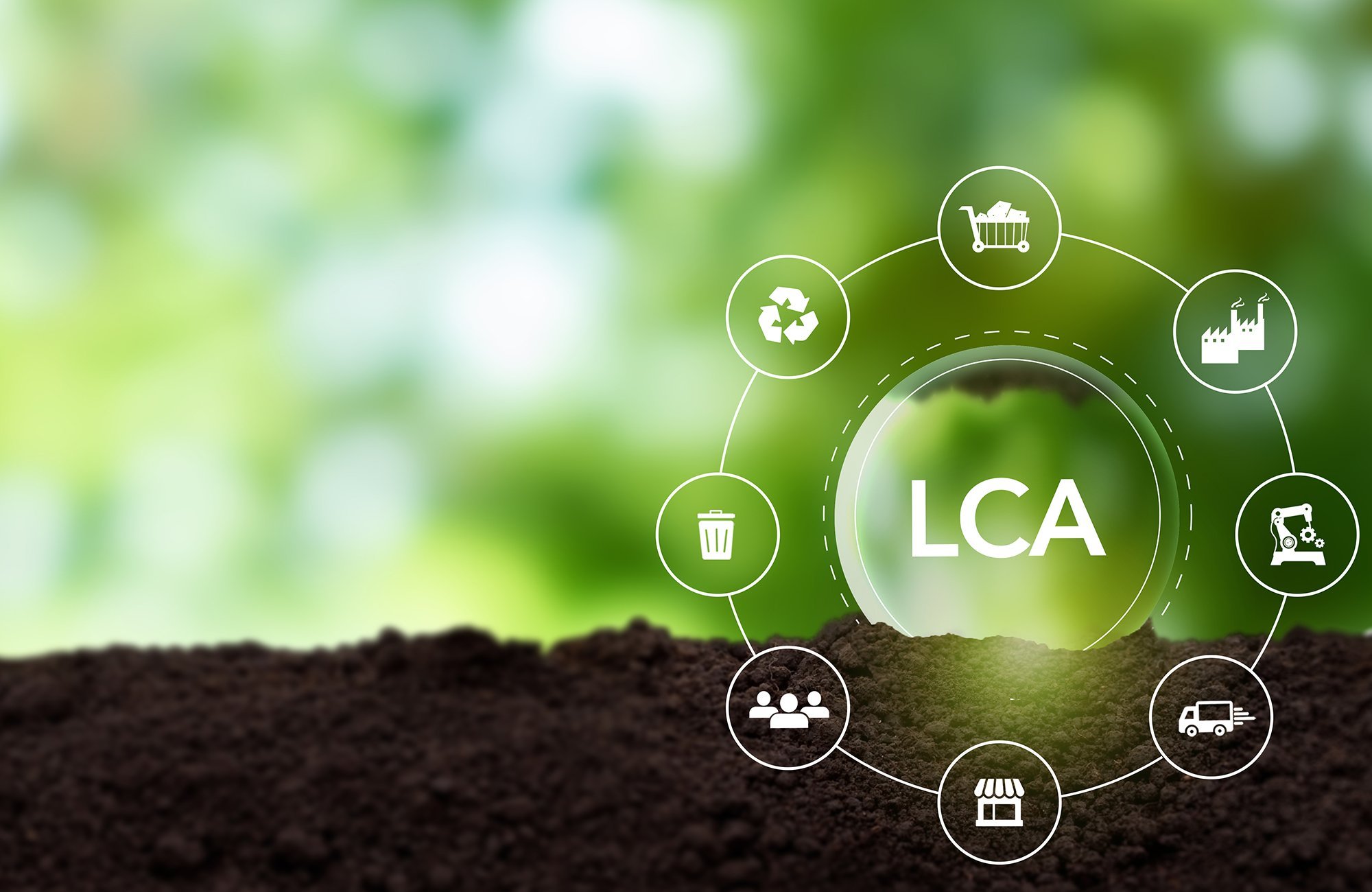
生命週期評估(LCA)是用以衡量一個目標系統之環境績效的系統性工具(Hauschild et al. 2020; Herrmann et al. 2025);而伴隨著人類邁向淨零目標,生命週期工程(Life Cycle Engineering, LCE),可視為邁向此一願景的系統性方法(Hauschild et al. 2020)。現今已有許多研究探討不同產品系統如何協助邁向淨零,包含氫能(Lejeune et al. 2026)、糧食(Goss and Sherwood 2024),以及伴隨著地球臨界理論(planetary boundaries; (Rockström et al. 2024; Rockström et al. 2009; Steffen et al. 2015),與基於此環境乘載能力與生命週期評估方法發展的絕對永續性評估(Hjalsted et al. 2021; Kara and Hauschild 2024)等概念,這些新研究議題的發展,意味著永續評估的主軸,已逐漸從所謂的越來越好(better and better),邁向足夠好(good enough)的方向。
台灣邁向淨零的政策過程,大多聚焦在全國範圍內的排放量減少。環境部推動多年的減碳標籤,產品的碳足跡僅需與基準年的排放量進行比較,只要有減少,即可獲得減碳的認證。但這樣的評估僅能判定相對好的產品,缺乏建立一個什麼叫做絕對低碳產品的機制。如此缺乏「絕對低碳」或「絕對永續」之微觀產品層級的相對減碳指標,將面臨兩項主要挑戰(Hauschild et al. 2020):
- 反彈效應(Rebound Effect): 即使單一產品的單位碳排放有所降低,若產品總產量因市場需求而大幅增加,其所造成的絕對環境負荷總量(Alcott 2005; Zink and Geyer 2017),仍可能超越行星邊界(或地球臨界理論),導致國家淨零路徑的破口。
- 減量成效無法有效對接總量:相對減碳無法與宏觀的碳排放額度或氣候科學目標(如《巴黎協定》的1.5°C升溫限制)進行量化連結,缺乏絕對環境閾值(Bjørn and Hauschild 2015; Bjørn et al. 2016),企業難以評估其產品的減碳進程,是否足以支撐全球的淨零時程。
建立絕對永續性產品的標竿值,對於落實淨零目標的關鍵貢獻,體現於以下兩個面向:
1.轉化宏觀的碳排放額度降尺度為產品層級的應用
絕對永續性評估的核心,在於將全球或國家層級的絕對環境臨界閾值(如剩餘碳額度),透過科學化的資源配置原則(Bai et al. 2024),按比例拆解並分配至特定的產品系統或功能單位。此標竿值能為企業提供明確的「碳安全操作空間」,使產品的環境績效,能直接與全球淨零目標接軌。
2.考量具備實質性的技術與製程變革
當標竿值從「與過去相比有進步」轉變為「符合絕對環境承載力」時,將迫使企業放棄邊際性的效率優化,進而轉向破壞性的綠色創新。例如,在氫能供應鏈或糧食系統的開發中,絕對標竿能明確指出哪些製程,具備達成絕對永續的潛力,避免資金與資源錯置於無法滿足淨零終極目標的過渡性技術。
歐盟於2025年發布第一份絕對環境永續性評估指引(Bjørn et al. 2025),標誌著國際趨勢已開始將此概念制度化。台灣作為全球關鍵供應鏈的一環,建立本土產品的絕對永續標竿值,不僅能提供國內產業明確的依循標準,亦能提升台廠在面對國際市場時的綠色競爭力與合規韌性。落實淨零目標,不能僅依賴大方向、原則性的宣告,必須建立在嚴謹的量化科學基礎上。從「相對變好」走向「絕對永續」,是確保人類經濟活動,不超越地球臨界點的必然路徑。建立絕對永續性產品的標竿值,不僅填補了台灣現行減碳標籤等政策,在量化淨零貢獻上的不足,更為企業在產品生命週期管理上,提供了實質且具備科學基礎的指引。本研究團隊目前正在進行相關的研究,希望不久能有成果介紹給大家。
參考文獻
Alcott B (2005) Jevons’ paradox. Ecol Econ 54:9-21. https://doi.org/https://doi.org/10.1016/j.ecolecon.2005.03.020
Bai X, Hasan S, Andersen LS, Bjørn A, Kilkiş Ş, Ospina D, Liu J, Cornell SE, Sabag Muñoz O, de Bremond A, Crona B, DeClerck F, Gupta J, Hoff H, Nakicenovic N, Obura D, Whiteman G, Broadgate W, Lade SJ, Rocha J, Rockström J, Stewart-Koster B, van Vuuren D, Zimm C (2024) Translating Earth system boundaries for cities and businesses. Nat Sustainability 7:108-119. https://doi.org/10.1038/s41893-023-01255-w
Bjørn A, Hauschild MZ (2015) Introducing carrying capacity-based normalisation in LCA: framework and development of references at midpoint level. Int J Life Cycle Assess 20:1005-1018. https://doi.org/10.1007/s11367-015-0899-2
Bjørn A, Margni M, Roy P-O, Bulle C, Hauschild MZ (2016) A proposal to measure absolute environmental sustainability in life cycle assessment. Ecol Indic 63:1-13. https://doi.org/https://doi.org/10.1016/j.ecolind.2015.11.046
Bjørn A, Paulillo A, Sanye ME, De LV, Vea E, Hauschild MZ, Sala S (2025) Guidance for applying absolute environmental sustainability assessment on activities at different scales (BETA version). https://doi.org/10.2760/7677803
Goss MA, Sherwood J (2024) An absolute environmental sustainability assessment of food. Food Front 5:855-866. https://doi.org/https://doi.org/10.1002/fft2.371
Hauschild MZ, Kara S, Røpke I (2020) Absolute sustainability: Challenges to life cycle engineering. CIRP Ann 69:533-553. https://doi.org/https://doi.org/10.1016/j.cirp.2020.05.004
Herrmann C, Hauschild MZ, Mativenga P (2025) All engineers should be life cycle engineers with a mindset for absolute sustainability. Procedia CIRP 135:409-419. https://doi.org/https://doi.org/10.1016/j.procir.2025.01.058
Hjalsted AW, Laurent A, Andersen MM, Olsen KH, Ryberg M, Hauschild M (2021) Sharing the safe operating space: Exploring ethical allocation principles to operationalize the planetary boundaries and assess absolute sustainability at individual and industrial sector levels. J Ind Ecol 25:6-19. https://doi.org/https://doi.org/10.1111/jiec.13050
Kara S, Hauschild MZ (2024) Life Cycle Engineering as a Pathway to Achieving Net-zero Targets. Procedia CIRP 122:12-18. https://doi.org/https://doi.org/10.1016/j.procir.2024.01.003
Lejeune M, Kara S, Hauschild MZ, Shahrabifarahani S, Daiyan R (2026) Pathways to global hydrogen production within planetary boundaries. Nat Commun https://doi.org/10.1038/s41467-026-70168-x
Rockström J, Steffen W, Noone K, Persson Å, Chapin FSI, Lambin E, Lenton TM, Scheffer M, Folke C, Schellnhuber HJ, Nykvist B, de Wit CA, Hughes T, van der Leeuw S, Rodhe H, Sorlin S, Snyder PK, Costanza R, Svedin U, Falkenmark M, Karlberg L, Corell RW, Fabry VJ, Hansen J, Walker B, Liverman D, Richardson K, Crutzen P, Foley J (2009) Planetary Boundaries: Exploring the Safe Operating Space for Humanity. Ecol Soc 14:32.
Rockström J, Donges JF, Fetzer I, Martin MA, Wang-Erlandsson L, Richardson K (2024) Planetary Boundaries guide humanity’s future on Earth. Nature Reviews Earth & Environment 5:773-788. https://doi.org/10.1038/s43017-024-00597-z
Steffen W, Richardson K, Rockstrom J, Cornell SE, Fetzer I, Bennett EM, Biggs R, Carpenter SR, de Vries W, de Wit CA, Folke C, Gerten D, Heinke J, Mace GM, Persson LM, Ramanathan V, Reyers B, Sorlin S (2015) Planetary Boundaries: Guiding Human Development on a Changing Planet. Science 347:1259855.
Zink T, Geyer R (2017) Circular Economy Rebound. J Ind Ecol 21:593-602. https://doi.org/https://doi.org/10.1111/jiec.12545
精選圖片來源:https://milieudatabase.nl/